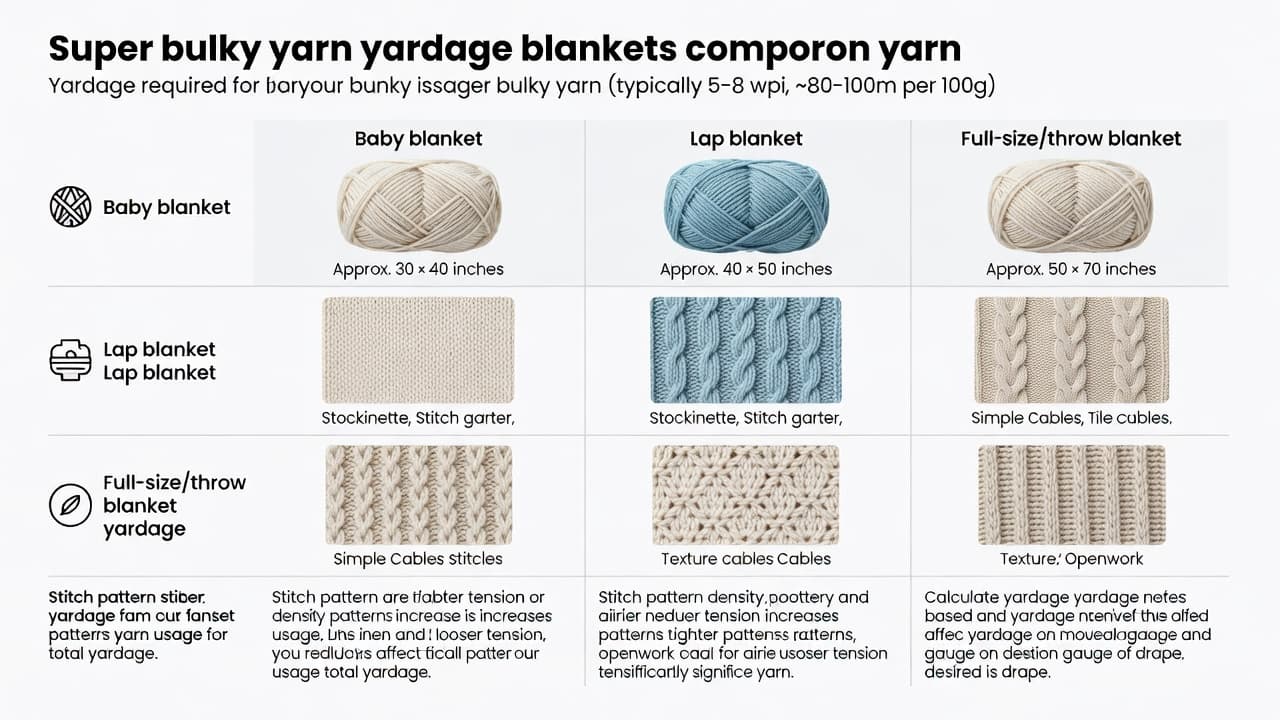

El hilo super bulky hace mantas rápidas y acogedoras, pero hay que saber cuánto comprar. El metraje depende del tamaño de la manta, la puntada y la tensión. Esta guía ofrece estimaciones generales y explica qué afecta la cantidad.
| Tamaño de manta | Metraje aproximado |
|---|---|
| Manta de bebé | 400-700 yards |
| Manta de regazo | 1,200-1,500 yards |
| Throw | 1,500-2,000 yards |
| Manta tamaño completo | 2,500-3,000 yards |
Son estimaciones iniciales. Su proyecto puede necesitar más o menos según los factores siguientes.
Las mantas más grandes necesitan más hilo. Mida las dimensiones deseadas y compare con patrones similares.
Usar un tamaño distinto al del patrón puede cambiar el metraje. Ganchillos/agujas más grandes suelen significar menos hilo; más pequeños, más.
| Tamaño | Dimensiones aproximadas |
|---|---|
| Bebé | 30" × 36" a 36" × 40" |
| Regazo | 40" × 50" a 50" × 60" |
| Throw | 50" × 60" a 60" × 70" |
| Completo | 80" × 90" o más |
Mantas de bebé necesitan unos 400-700 yards de hilo super bulky; de regazo unos 1,200-1,500; tamaño completo unos 2,500-3,000. La puntada, tensión y tamaño de aguja/ganchillo afectan el total. Haga muestra primero y compre extra por seguridad.
Depende del tamaño del ovillo. Ovillo de 100 yards: bebé ~4-7, regazo ~12-15, completo ~25-30. Revise el metraje por ovillo y calcule.
Sí. Puntadas densas o con textura usan más hilo. Las simples, menos. El encaje usa menos pero da manta más ligera.
Sí. Un ovillo extra (o 10-15% más) evita quedarse sin hilo, especialmente con hilos teñidos a mano o multicolor.
Puede, pero la muestra y caída cambiarán. Para resultados uniformes, use un solo grosor o siga un patrón diseñado para varios grosores.
Este artículo forma parte de nuestra serie de conocimiento sobre hilos, con consejos prácticos sobre planificación de mantas y metraje para tejedores y crochetistas.