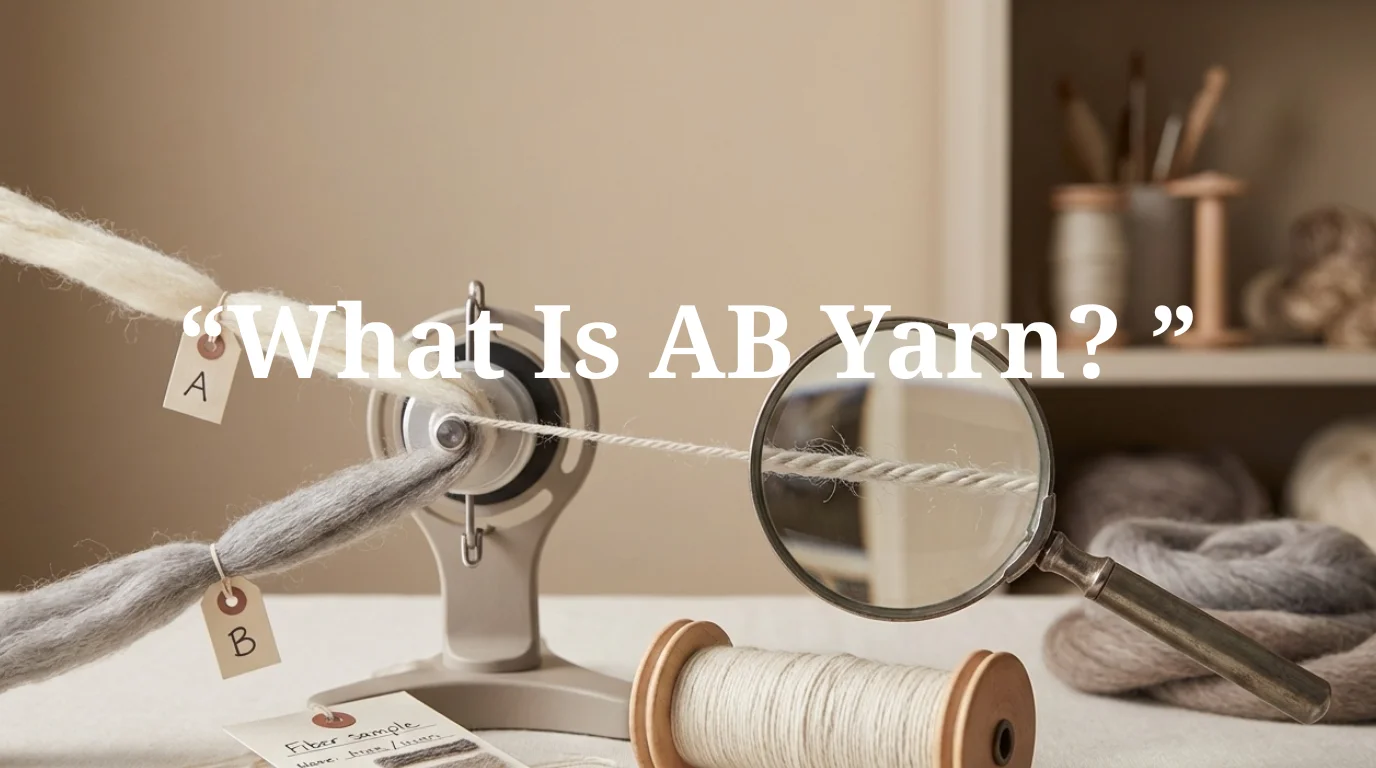

AB-garn—mere formelt kendt som Sirospun-garn—er et kompositspindgarn, der bruges bredt i moderne tekstilproduktion. Ved at kombinere to rovings til ét garn gennem en særlig spindemetode giver AB-garn mange af fordelene ved plied garn, samtidig med at effektiviteten ved enkeltgarnproduktion bevares.
I denne guide tager vi et professionelt, produktionsorienteret blik på hvad AB-garn er, dets strukturelle egenskaber, typiske materialekombinationer og—kritisk vigtigt—hvordan man håndterer AB-garnbrud under spinning.
AB-garn betegner et garn spundet af to separate rovings (A og B), der trækkes og snoes sammen til ét færdigt garn. Fordi der indgår to rovings, kaldes det almindeligvis AB-garn i Kina.
I international terminologi kaldes processen Sirospun eller Siro-spinning, og det resulterende garn Sirospun-garn.
Teknologien blev oprindeligt udviklet til uldspinning, men anvendes i dag bredt i bomuldsspinning, polyesterblandinger og viskoseblandinger.
AB-garn kan også forekomme i farvedifferentierede former, som er almindelige i dekorative og mode-tekstiler.
Siro-spinning—også kaldet parallel twist-spinning—følger denne proces:
👉 Kort sagt: to rovings spindes til ét garn og skaber en struktur som plied garn, men i én enkelt spinneoperation.
Fordi begge strenge snoes synkront i samme retning, bindes overfladefibrene tæt:
AB-garn udviser:
Sammenlignet med traditionelle plied-garnstoffer:
Kompakte siro-spindgarne kan bruges til:
Nogle af de mest almindelige AB-garnblandinger omfatter:
TC / AB-garn Polyester + Bomuld AB-garn Kombinerer holdbarhed med naturlig komfort
TR / AB-garn Polyester + Viskose AB-garn Giver blødhed, drapering og dimensionsstabilitet
Disse blandinger bruges bredt i skjorter, jakkesæt, strikkegods og funktionelle stoffer.
Fordi AB-garn består af to separate trukne strenge, kan en særlig fejlmode opstå:
Dette er en af de mest kritiske kvalitetsrisici i siro-spinning.
For stabil kvalitet er moderne siro-linjer udstyret med en enkeltstrengs-brudbeskyttelse, som:
AB-garn (Sirospun-garn) bygger bro mellem enkeltgarnseffektivitet og plied-garns ydeevne. Det gør det muligt for producenter at:
Derfor er AB-garn blevet en strategisk garnløsning i både traditionelle og high-end tekstilmarkeder.
AB-garn er ikke bare en garntype—det er en spindfilosofi. Ved intelligent at kombinere to rovings til én kompakt struktur leverer Sirospun-garn styrke, glathed og effektivitet i én pakke.
Med korrekte brudkontrolsystemer og procesoptimering bliver AB-garn en pålidelig, højtydende løsning til både vævede og strikkede stoffer.
For producenter, der vil erstatte plied garn, reducere hårighed eller forbedre stofkvalitet uden øget kompleksitet, forbliver AB-garn blandt de mest effektive spindeteknologier i dag.
Denne artikel giver et professionelt overblik over AB-garn (Sirospun-garn), herunder strukturelle egenskaber, materialblandinger og industrielle løsninger på garnbrud. For mere indsigt i garnteknologier og tekstilproduktion, udforsk vores Yarn Insights-serie.