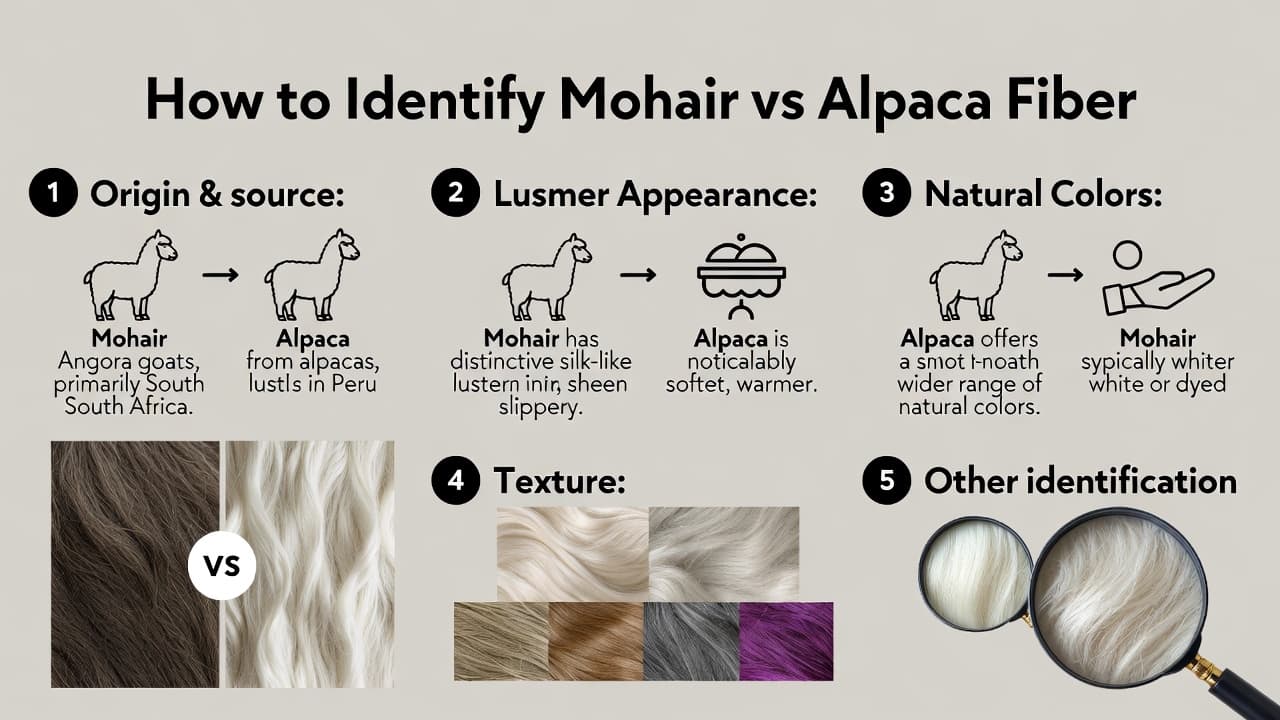

Mohair (fra angorageiten) og alpaca (fra alpacaen) kan ligne hinanden i udseende og følelse — begge er glatte, bløde og anti-nopping på grund af lange, glatte fibre. De forveksles ofte. Mohair forbindes med Sydafrika og har silkeagtig glans, fast spænding og pæn hårighed; alpaca forbindes med Peru (og andre steder), er blødere og finere med naturlig farvevariation (f.eks. hvid, brun, beige, sort). Følelse (alpaca blødere, mindre spænding) og farve (alpacas naturlige palet) hjælper med at skelne dem.
I denne guide forklarer vi hvordan man skelner mohair fra alpaca ved køb eller arbejde med garn.
Mohair er fiber fra angorageiten. Hovedproduktion er i Sydafrika. Fibren er krøllet og fin. Mohairgarn har silkeagtig glans, glat hånd, pæn hårighed og god spænding. Højkvalitets mohair bruges ofte med tykke pinde; stoffet er blødt, let og har en blød, let tåget overflade. Mohair har været brugt i high-end mode-strik siden 1990'erne.
Alpaca er fiber fra alpacaen, et sydamerikansk kameldyr. Peru er en stor producent. Alpaca findes i mange naturlige farver (f.eks. hvid, brun, gulbrun, sort) — ca. 12 naturlige farver nævnes ofte — og er lys og blød og farvebestandig i naturlig form. Alpaca er blød, let og glat — «blød som bomuld, glat som silke». Dens hule struktur gør den let og elastisk; den modstår deformation og forbliver blød og glat efter tryk.
På grund af disse ligheder forveksles mohair og alpaca ofte i færdige beklædningsgenstande eller umarkeret garn.
| Aspekt | Mohair | Alpaca |
|---|---|---|
| Oprindelse | Angorageit (f.eks. Sydafrika) | Alpaca (f.eks. Peru) |
| Glans | Silkeagtig, udtalt | Blødere glans |
| Spænding / hånd | Fastere, mere fjeder | Blødere, finere; mindre spænding |
| Farve | Ofte ensartet (især farvet) | Naturligt farveudvalg (hvid, brun, beige, sort) — nøgleforskel |
| Fiber | Krøllet, fin | Hul, let, elastisk |
Praktiske tips:
Mohair (angorageit) og alpaca er begge glatte, bløde og anti-nopping. Mohair har tendens til silkeagtig glans og fastere spænding; alpaca er blødere, finere med naturlig farvevariation. Brug håndfølelse, glans, spænding og farve — plus oprindelse når tilgængelig — til at skelne dem og vælge den rette fiber til dit projekt.
Mohair har normalt silkeagtig glans og fastere spænding; alpaca er blødere, finere og har ofte naturlig farvevariation. Tjek nøglebåndet for fiberindhold og oprindelse (angorageit vs alpaca).
Mohair kommer fra angorageiten. Sydafrika er en stor producent. Fibren er krøllet og fin med silkeagtig glans.
Alpaca kommer fra alpacaen (sydamerikansk kameldyr). Peru er en stor producent. Alpaca har mange naturlige farver og en blød, glat, modstandsdygtig hånd.
Denne artikel er en del af vores garnvidensserie med praktisk indsigt i luksusfibre og identifikation for strikkere og købere.