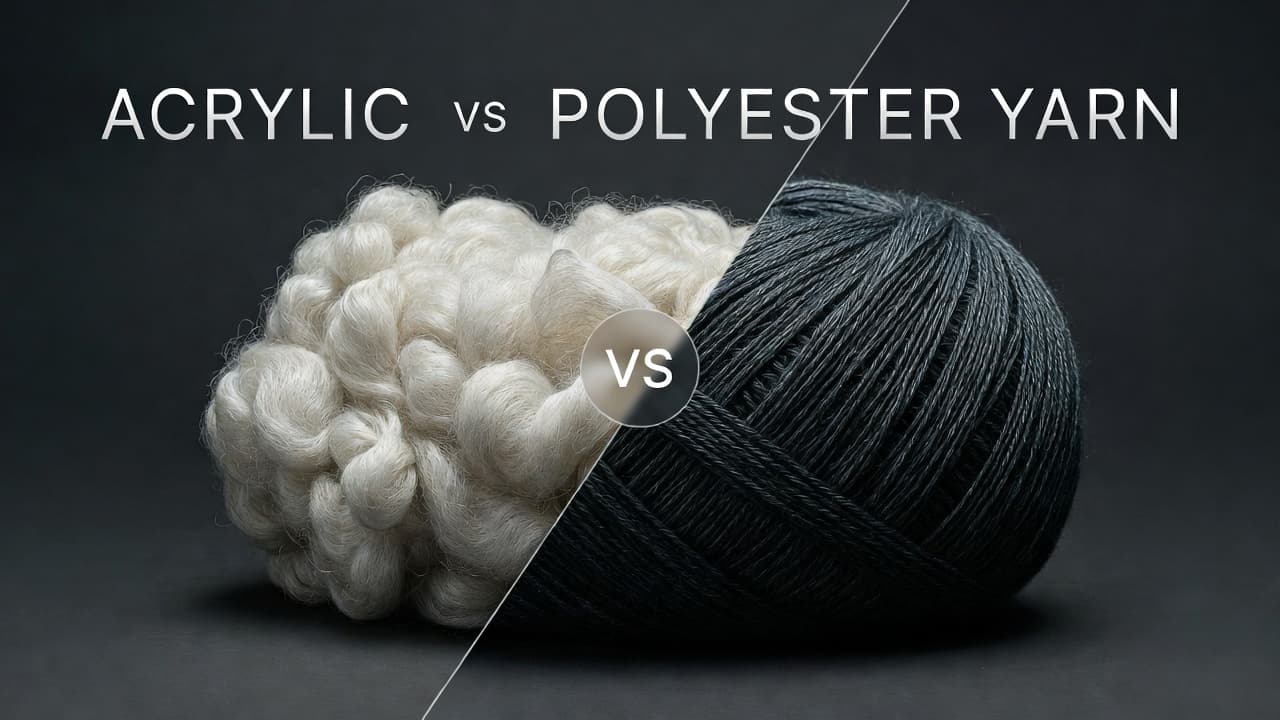

Akryl og polyester er begge syntetiske garntyper, men de udmærker sig på forskellige områder: polyester fører på styrke og slidstyrke; akryl på lysægthed og varme (ca. 15 % varmere end uld). Hvad der er «bedst» afhænger af den ydelse, du har brug for — holdbarhed og fladhed efter vask favoriserer polyester; blødhed, varme og solmodstand favoriserer akryl.
I denne guide sammenligner vi akryl vs polyester garn og foreslår, hvornår man vælger hver.
Polyestergarn er garn lavet af polyesterfiber (syntetisk polymer). Polyester er stærkt, slidstærkt, elastisk og bevarer formen efter gentagen vask. Det bruges bredt i beklædning, boligtekstiler og industrielle anvendelser (f.eks. dug, tekniske stoffer).
Akrylgarn er garn lavet af polyacrylonitril (akryl) fiber. Akryl kaldes ofte «syntetisk uld»: det er fyldigt, krøllet, blødt og ca. 15 % varmere end uld. Styrken er 22,1–48,5 cN/dtex — 1–2,5× uld. Lysægtheden er den bedste blandt almindelige syntetik; efter et år i solen bruges det til gardiner, presenninger og markiser. Modstår syre, oxidanter og mange organiske opløsningsmidler, men har dårlig alkalimodstand. Blødgøringstemperatur er ca. 190–230 °C.
| Egenskab | Polyester | Akryl |
|---|---|---|
| Styrke | Højeste af de to; 2,6–8,0 cN/dtex | 22,1–48,5 cN/dtex; 1–2,5× uld |
| Slidstyrke | Bedste (efter nylon) | God |
| Elasticitet | Tæt på uld; gendanner ved 5–6 % | God; ~65 % resiliens ved 20 % forlængelse |
| Varme | Moderat | ~15 % varmere end uld |
| Lysægthed | God (anden til akryl) | Bedste blandt syntetik |
| Form efter vask | Forbliver flad | God |
| Pris (typisk) | Ofte lavere | Ofte højere |
| Hånd | Glat, flad | Blød, fluffy, uldlignende |
Opsummering: Vælg polyester, når styrke, slidstyrke og fladhed efter vask betyder noget (f.eks. dug, arbejdstøj, teknisk brug). Vælg akryl, når varme, blødhed, lysægthed og uldlignende hånd betyder noget (f.eks. sweaters, tæpper, gardiner).
Polyester udmærker sig i styrke, slidstyrke og dimensionsstabilitet (forbliver fladt); akryl i lysægthed, varme og uldlignende blødhed. Der er ikke ét enkelt «bedst» — vælg efter projekt: holdbarhed og fladhed → polyester; varme, blødhed og solmodstand → akryl.
Polyester er generelt stærkere (højere cN/dtex) og har bedre slidstyrke end akryl. Akryl er stærkere end uld, men ikke end polyester.
Akryl har den bedste lysægthed blandt almindelige syntetiske fibre. Polyester er god, men nummer to til akryl; begge bruges til gardiner og udendørstekstiler.
Akryl råmateriale og forarbejdning (polymerisering, spinning, krølling osv.) koster ofte mere end polyester. Akryl prissættes for uldlignende varme og blødhed; polyester for styrke og alsidighed.
Denne artikel er en del af vores garnvidensserie med praktisk indsigt i syntetiske garntyper og valg for strikkere og stofkøbere.