Aran wool is wool named after the Aran Islands off the west coast of Ireland. It is valued for warmth, softness, and durability and is one of the more expensive wool types. The high cost comes from wool quality (sheep raised in harsh conditions producing very warm, soft fiber), traditional hand-spinning and artisan methods, and high demand from buyers who value its character and heritage.
In this guide, we explain why Aran wool is so expensive and when it is worth the investment.
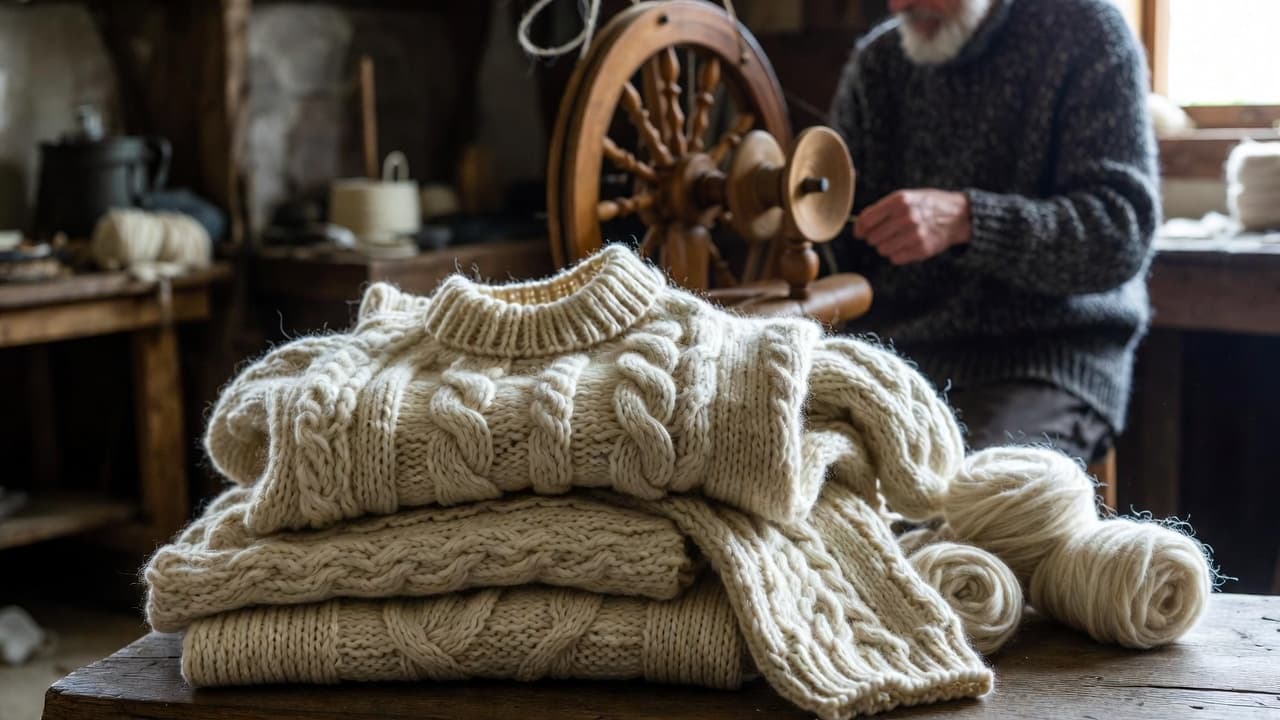
Aran wool is wool associated with the Aran Islands (Ireland). The sheep that produce this wool are often raised in harsh conditions, and their wool is among the warmest and softest available. Aran wool is frequently hand-spun and dyed using traditional techniques; it is used for Aran sweaters and other textured, warm knitwear that has become a symbol of Irish craft.
Sheep that produce Aran-type wool are often raised in harsh conditions (wind, rain, cold). This can produce dense, warm, and soft wool that is highly valued. The quality of the raw fiber supports a premium price.
Aran wool is often hand-spun, which is time-consuming and labor-intensive. Traditional dyeing and processing add further cost. This artisan labor is reflected in the final price.
Many Aran products are made by skilled artisans using traditional methods passed down over generations. These techniques are slow and require experience, which increases production cost and supports higher retail prices.
Aran wool is in high demand among people who value its warmth, durability, and heritage. Willingness to pay a premium helps sustain higher prices.
Aran wool is expensive because of wool quality from harsh climates, hand-spinning and traditional processing, skilled artisan labor, and strong demand. For those who value warmth, durability, and heritage, it can be worth the price; for others, alternative wools may be more practical.
Aran wool is wool associated with the Aran Islands off Ireland. It is known for warmth, softness, and durability and is often hand-spun and used for traditional Aran sweaters.
Main reasons: high-quality wool from sheep in harsh conditions, hand-spinning and traditional dyeing, skilled artisan production, and high demand for authentic Aran products.
It can be worth it if you value warmth, durability, traditional craft, and heritage. If budget or easy care is the priority, other wools may be a better fit.
This article is part of our yarn knowledge series, offering practical insights into wool types and heritage crafts.