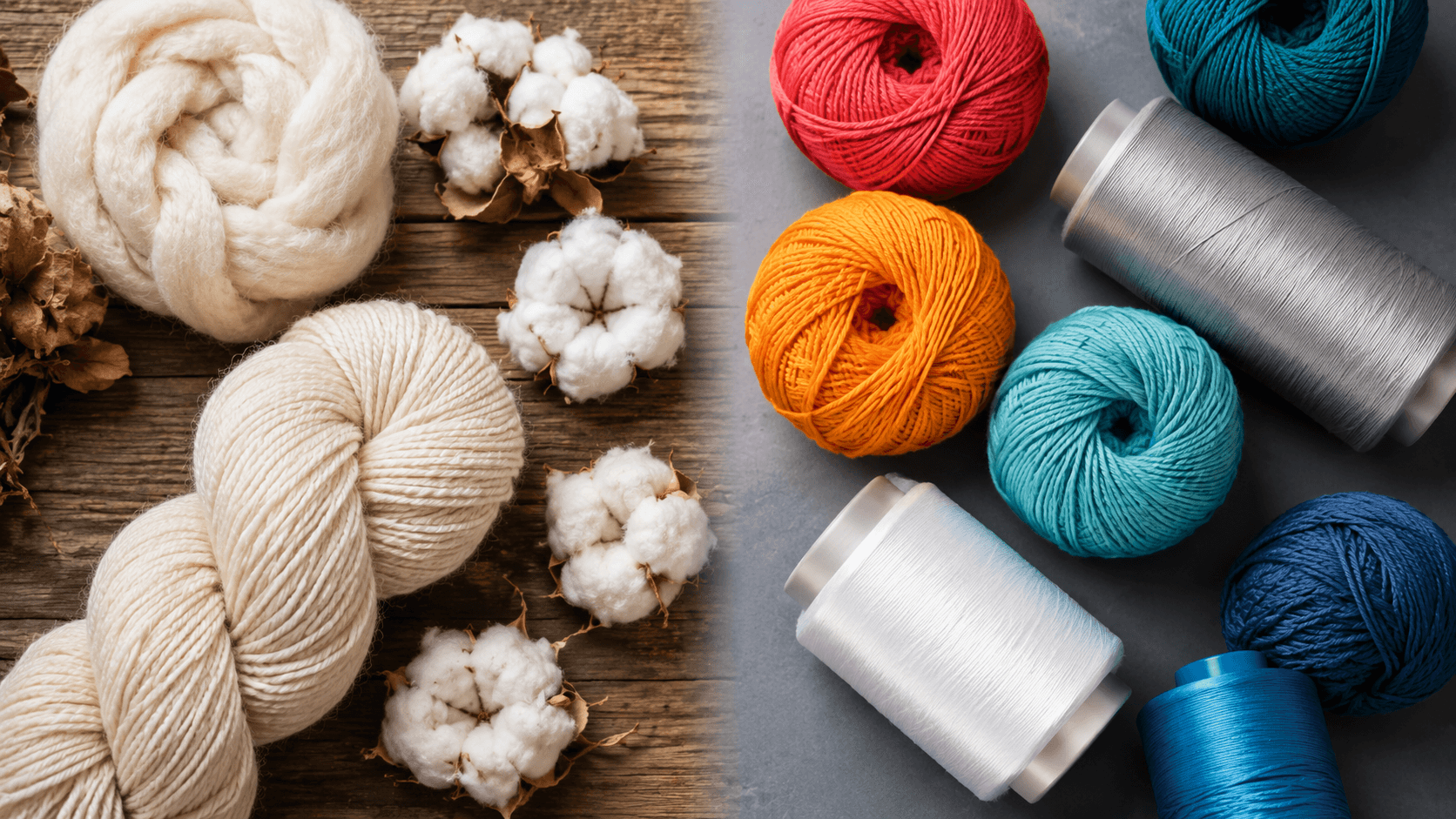
Natural yarn comes from plants and animals (cotton, wool, alpaca); synthetic yarn is made from polymer fibers (acrylic, polyester, nylon). Natural fibers often support premium positioning and breathability; synthetics offer lower cost, easy care, and color consistency. Most commercial knitting and crochet yarn is a blend of both.
Choosing the wrong fiber affects hand feel, care labels, retail price, and compliance. This guide compares major yarn types used in knitting and crochet so importers, wholesalers, and brand buyers can spec products with confidence.
| Aspect | Natural fibers | Synthetic fibers |
|---|---|---|
| Source | Plants, animals | Petroleum-based polymers |
| Hand feel | Breathable; varies by grade | Soft, uniform; wool-like options |
| Typical price | Higher (wool, cashmere) | Lower (acrylic, polyester) |
| Care | May shrink or felt; read label | Usually machine washable |
| Marketing story | Organic, RWS, premium animal fiber | Recycled PET, GRS, easy-care |
| Best for | Premium apparel, baby cotton, seasonal knits | Mass craft, value retail, blankets |
| Property | Detail |
|---|---|
| Hand feel | Soft, matte, breathable |
| Strength | Good tensile strength; less elastic than wool |
| Common uses | Summer wear, dishcloths, baby items, amigurumi |
| Buyer note | Heavy when wet; mercerized cotton resists shrink better |
Variants to specify on POs: combed cotton, mercerized cotton, organic cotton (OCS), recycled cotton (GRS).
| Fiber | Characteristics | Typical product use |
|---|---|---|
| Merino wool | Fine, soft, elastic | Sweaters, socks, base layers |
| Ordinary wool | Warm, durable | Outerwear, blankets |
| Alpaca | Soft, low itch for many users | Scarves, throws, premium knits |
| Mohair | Lustrous, fluffy halo | Fashion yarns, blending |
| Cashmere | Ultra-soft, luxury hand | High-end knitwear |
For next-to-skin and children's products, buyers often require OEKO-TEX®, RWS, or RAS documentation.
| Property | Detail |
|---|---|
| Hand feel | Wool-like softness at lower cost |
| Care | Machine washable; moth resistant |
| Common uses | Blankets, craft yarn, amigurumi, value retail |
| Sourcing note | Easy to dye; wide color range; dominant in marketplace bestsellers |
Most mass-market knitting and crochet yarn on Amazon and in craft chains is acrylic or acrylic-dominant.
| Property | Detail |
|---|---|
| Strength | High tenacity; abrasion resistant |
| Hand feel | Smoother, less fluffy than acrylic |
| Common uses | Sock blends, outdoor textiles, industrial mixes |
Usually blended—not sold as 100% polyester craft yarn in most consumer lines.
Typically 3–20% of a blend for elasticity and durability—standard in sock yarn and tight-twist products.
| Blend | Why manufacturers use it | Example retail use |
|---|---|---|
| Cotton / acrylic | Softness + easy care + cost control | Baby yarn, everyday craft |
| Wool / acrylic | Warmth + washability + margin | Sweater yarn |
| Cotton / nylon | Strength for fine-gauge socks | Sock yarn |
| Wool / nylon | Durability in garments | Sock and sport yarn |
Always state exact percentages on labels and purchase orders (e.g. 80/20, not "cotton blend").
| Product line | Fiber direction |
|---|---|
| Value craft yarn (big-box) | Acrylic, acrylic/cotton |
| Premium hand-feel | Merino, cotton, chenille |
| Baby / sensitive skin | Combed cotton, OEKO-TEX® certified blends |
| Blankets and throws | Bulky acrylic, chenille, wool blends |
| Socks | Cotton/nylon, wool/nylon |
| Summer apparel | Cotton, linen or bamboo blends |
| Marketplace gradient SKUs | DK–worsted acrylic, velvet/chenille |
| Fiber family | What to inspect in samples |
|---|---|
| Cotton | Evenness, neps, mercerization if claimed |
| Wool | Micron / grade, softness, felting behavior |
| Acrylic | Pilling resistance, color fastness on dark shades |
| Blends | Composition lab test vs. label claim |
| All types | Twist balance, ball weight tolerance, certification match |
Acrylic is a textile polymer fiber (polyacrylonitrile). It is manufactured like yarn for knitting and crochet—not sold as rigid plastic goods.
Medium-weight acrylic (#4 worsted)—affordable, forgiving to work with, machine washable, consistent between batches.
Yes. Request OCS chain-of-custody and mill certificates for organic cotton or wool claims.
Synthetic and blends usually offer stronger margin at mainstream price points. Natural and premium animal fibers support higher retail tiers and brand storytelling.
Combed cotton or cotton-rich blends with OEKO-TEX® are common for baby positioning. Acrylic blends compete on price and easy care—match your market and label rules.
Both feel plush; chenille is pile yarn with a velvety surface, often used in blankets. Confirm exact construction with the factory—trade names vary by supplier.
| Your goal | Start with these yarn types |
|---|---|
| Lowest landed cost | Acrylic, polyester blends |
| Premium hand feel | Merino, combed cotton, chenille |
| Easy-care consumer label | Acrylic, cotton/acrylic |
| Sustainability claims | GRS recycled, RWS wool, OCS cotton |
Natural vs synthetic is not an either/or decision for most product lines—blends balance cost, care, and feel. Spec the fiber, get lab confirmation, and match certifications to your retail channel before you order bulk.
Browse our yarn catalog or contact us for samples and specs across 1,500+ yarn types.